vendredi 27 mars 2026
jeudi 26 mars 2026
The human experience is dictated by rhythms—the ebb and flow of tides, the shifting of seasons, and the silent, pulsing cadence of our own internal biology. Yet, for many, the most profound interaction with these rhythms occurs in the dead of night, during those jarring moments when the eyes snap open and the digital glow of a bedside clock reveals a recurring number. It is rarely a coincidence. When you find yourself staring at the ceiling at the exact same hour night after night, it is often a signal from a sophisticated internal system trying to communicate a message that the conscious, waking mind has been too busy to hear. While modern medicine might point toward cortisol spikes or sleep apnea, ancient wisdom—specifically Traditional Chinese Medicine (TCM)—suggests that the timing of these awakenings offers a diagnostic map of our spiritual and emotional well-being.
Central to this understanding is the concept of the Meridian Clock. In TCM, life force energy, known as Qi, circulates through the body’s various pathways, or meridians, in a precise twenty-four-hour cycle. Every two hours, the flow of Qi peaks in a specific organ system. When a meridian is blocked by repressed emotion, physical toxicity, or spiritual stagnation, the surge of energy can act as an alarm, jolting the individual awake. By decoding the specific hour of these disturbances, we can begin to uncover the hidden conflicts that are preventing us from achieving true rest.
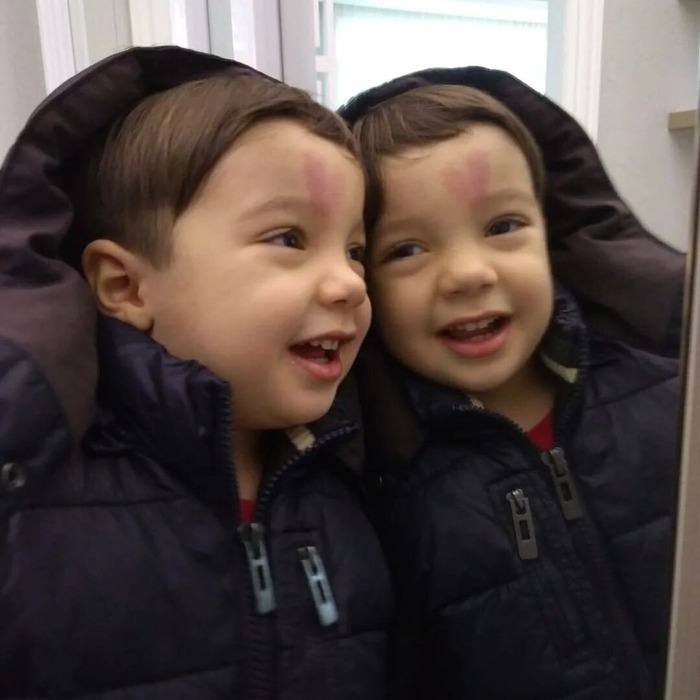
The story of Chinar, the boy born with a rare and beautiful heart-shaped birthmark, continues to capture hearts around the world. When he first arrived, his parents and doctors alike were fascinated by the distinct red shape perfectly positioned on his forehead. While many people expected the mark to change or vanish as he got older, Chinar’s journey has taken a different path, turning him into a symbol of unique beauty.
The Early Days of a “Love Baby”
When Chinar was first born, his parents were surprised to see the bright red heart. Like many newborns with birthmarks, they initially assumed it was a temporary “stork bite” or a small mark that would simply “disappear in a few days” as his skin matured. However, as the weeks turned into months, it became clear that this mark was a permanent part of who he is.

The shape was so perfectly formed that nurses and family members were instantly drawn to him. It wasn’t long before photos of the “love baby” began to spread online, with people from all over the globe amazed by the natural phenomenon.
How He Looks Today
Now that some time has passed, many wonder if the mark has faded or changed. Interestingly, while medical experts often suggest that such marks might lighten over time, Chinar’s birthmark has actually stayed quite prominent. As he has grown from a baby into a young boy, the mark has scaled with him.
Today, Chinar is a happy and energetic child. Those who meet him are often struck by his confidence and his striking features. Because of his natural charm and the way he carries himself, he is often called a “future supermodel” by those who meet him. Rather than being something he hides, the birthmark has become his most famous trait, making him stand out in the best way possible.

Growing Up with a Unique Feature
Despite some early medical predictions that the mark might go away, it has remained a vivid part of his appearance. In fact, some observers note that as he grows, the heart shape has become even more defined. His parents have embraced his look entirely, sharing his growth with a world that remains curious about his progress.
It is rare to see such a perfect shape occur naturally on a person’s skin, and Chinar wears it well. His story reminds us that what makes us different is often what makes us most beautiful. His cuteness is hard to put into words! Don’t you agree?
mercredi 25 mars 2026
The recent confirmation of Eric Trump’s elevated status within the family hierarchy, formalized in Florida on February 26, 2026, serves as far more than a routine corporate reshuffling or a standard internal promotion. It represents a watershed moment in the trajectory of the Trump family, a deliberate and high-stakes signal that the next chapter of an American dynasty is being written with calculated precision. For years, the public narrative often categorized Eric as the quieter, more reserved son, a figure who operated within the towering shadows cast by his father and his more media-prominent siblings. However, this new development suggests that the era of quiet labor is over. Eric Trump has emerged as a central pillar of the family’s future, blending business acumen, political savvy, and brand management into a singular, unmistakably strategic force.
To understand the weight of this transition, one must look at the foundation Eric spent years building far from the performative heat of cable news cycles. While his father occupied the most scrutinized office in the world and his brother became a fixture of the campaign trail, Eric remained rooted in the operational heart of the Trump Organization. He focused on the mechanics of the family’s global real estate empire and the intricacies of their philanthropic endeavors. This period of relative low-profile work allowed him to master the internal levers of power without the constant drain of public-facing controversy. It was a long game of institutional knowledge and loyalty, positioning him as the reliable architect of the family’s private interests while the public-facing members of the dynasty weathered the storms of national politics.
Now, with this more visible role officially confirmed, Eric is stepping onto the front lines of public life at a critical juncture. The move signals a regrouping of the Trump influence, centered in the political and social climate of Florida, which has become the de facto headquarters for the family’s post-presidential operations. By handing Eric a larger role in the public eye, the Trump story is refusing to recede into the annals of history or the archives of the past. Instead, it is evolving. The synergy of business, politics, and brand power that Eric now oversees is a refined version of the Trump strategy—one that recognizes the importance of legacy and the necessity of grooming the next generation to carry the weight of a name that continues to dominate the global conversation.
For supporters of the family, this confirmation is viewed through the lens of continuity and preparation. It is seen as a necessary and vital evolution, ensuring that the principles and the brand identity established by Donald Trump remain resilient and operational for decades to come. To his advocates, Eric represents a steady hand—a younger Trump who has learned to navigate the immense pressures of his surname while maintaining the discipline required to manage a sprawling international organization. This move is interpreted as a clear sign of strength and a commitment to the long-term survival of the movement, demonstrating that the family is thinking not in terms of election cycles, but in terms of generations.
Conversely, for the family’s critics, the timing and visibility of Eric’s confirmation raise significant alarms. It is viewed not as a simple promotion, but as a calculated effort to re-entrench the family’s influence within the national political landscape. Critics suggest that this move is a harbinger of renewed political ambitions, a strategic pivot designed to ensure that the Trump name remains a permanent fixture in American governance. The blending of private business interests with public political maneuvering remains a primary point of contention, with detractors arguing that Eric’s new role further blurs the lines between a family business and a political dynasty. They see the regrouping in Florida as the construction of a parallel power structure, one that operates with the efficiency of a corporation and the ambition of a political party.
Regardless of one’s political orientation, the clarity of the message is undeniable: the Trump story is entering a phase of institutionalization. By empowering Eric Trump, the family is signaling that they are not content with being a historical footnote. They are building a durable infrastructure designed to withstand the fluctuations of political fortune. Eric’s background in development and management provides the technical foundation for this effort, while his newfound public visibility provides the narrative hook. He has been handed a larger pen, and he is using it to write a script that merges the aesthetic of luxury branding with the populist energy of a national movement.
The geographic shift to Florida is also a vital component of this strategy. Florida has become a sanctuary of support and a laboratory for the family’s future initiatives. In this environment, Eric’s confirmation acts as a cornerstone for a new regional power base. From the sun-drenched corridors of Mar-a-Lago to the strategic boardrooms of the Trump Organization’s various holdings, the family is creating an ecosystem where their influence can be nurtured away from the traditional power centers of New York and Washington, D.C. Eric is the executor of this new territorial strategy, tasked with ensuring that the brand remains vibrant, the business remains profitable, and the political potential remains high.
As the months progress, the true impact of Eric’s expanded role will become manifest in how the Trump Organization chooses to engage with the world. We are likely to see a more assertive Eric Trump, one who is comfortable navigating both the high-stakes world of international finance and the grassroots energy of political rallies. He is the bridge between the old guard of the family’s business past and the uncertain, high-potential future of their political legacy. His task is to maintain the core of the brand while adapting it to a world that has been fundamentally changed by his father’s tenure in office.
In the final analysis, the confirmation of Eric Trump in Florida is a testament to the enduring power of family loyalty in the realm of high-stakes American life. It is a reminder that in the world of the Trumps, the greatest asset is not real estate or name recognition, but the trust that exists between the patriarch and his progeny. Eric has earned that trust through years of quiet discipline, and he is now being rewarded with the authority to shape what comes next. The pen is in his hand, the ink is fresh, and the eyes of the world are watching to see what he will write on the blank pages of the family’s next chapter.
The political landscape in Utah shifted significantly this week following the official confirmation that Erika Frantzve, the wife of Turning Point USA founder Charlie Kirk, has been appointed to a high-profile role within the state’s leadership. The news broke late in the afternoon, catching many by surprise and instantly igniting a firestorm of debate across both local political circles and national social media platforms. Supporters of the appointment have moved quickly to celebrate the move as a victory for conservative grassroots leadership, while critics and political analysts are already dissecting what her presence in Utah’s state apparatus might mean for future policy shifts.
Erika Kirk, who has long been recognized for her own professional background as a businesswoman, podcaster, and advocate for civic engagement, addressed the public shortly after the confirmation was finalized. In a statement that balanced humility with a clear sense of purpose, she expressed her profound gratitude to the people of Utah. She noted that the opportunity to serve in such a prominent capacity is a responsibility she does not take lightly, emphasizing her commitment to making a tangible, positive impact on the community. Her public persona, characterized by a blend of traditional values and modern media savvy, has earned her a dedicated following, adding significant weight and visibility to this new appointment.
The reaction from the Utah political establishment has been a mix of cautious observation and ideological enthusiasm. Local media outlets have highlighted that her appointment marks a pivotal moment for the state, signaling an openness to bringing in figures who are deeply connected to national conservative movements. Political analysts suggest that her role may involve spearheading initiatives related to education, community development, or civil liberties—areas where she has previously demonstrated a strong interest. The move is seen by many as a strategic alignment between Utah’s state leadership and the broader, influential network associated with the Kirks, which could lead to new collaborations between state-level officials and national organizations.
On social media, the confirmation has become a lightning rod for broader discussions about the intersection of political activism and public office. While many Utah citizens have voiced their support, citing her experience and energy as exactly what the state needs to navigate current challenges, others have expressed curiosity regarding the specific policy directions she will prioritize. This appointment highlights a growing trend in Utah’s political climate: the active recruitment of community leaders who possess not only local ties but also a significant national platform.
As the dust settles from the initial announcement, the public’s attention is turning toward the practicalities of her new role. Many are watching closely to see which legislative or community-based projects she will champion first. Given the high-profile nature of her personal and professional life, her every move is likely to be scrutinized by both allies and opponents. However, Erika Kirk seems prepared for the spotlight, reiterating her desire to work alongside state leaders to address the unique needs of Utah’s residents. This confirmation represents more than just a personnel change; it is a clear indicator of the evolving political dynamics within the state. Whether this move leads to the “positive impact” she promised or sparks further ideological friction, it is undeniable that her appointment has set the stage for a new and highly visible chapter in Utah’s governance.
These easy, savory baked appetizers are mini ham and Swiss sandwiches topped with a buttery, savory glaze and poppy seeds.
Ritz Cracker Party Sandwiches
Ingredients:
| INGREDIENTS | AMOUNT |
| Ritz crackers | 48 |
| Deli ham, sliced | 8 slices |
| Swiss cheese, sliced | 8 slices |
| Butter, melted | 4 tablespoons |
| Dijon mustard | 2 teaspoons |
| Worcestershire sauce | 1 teaspoon |
| Garlic powder | 1/2 teaspoon |
| Poppy seeds | 1 teaspoon |
| Dried minced onion | 1/2 teaspoon |
How To Make Ritz Cracker Party Sandwiches:
Step 1: Preheat and Prep: Preheat oven to 350F (175C). Place half of the 48 Ritz crackers (24 crackers total) in a 9×13-inch baking dish, flat side down.
Step 2: Assemble Sandwiches: Tear the 8 slices of deli ham into small strips and fold, then place a small amount of ham on each of the 24 base crackers. Cut the 8 slices of Swiss cheese into 1-inch pieces and place one piece on top of the ham/cracker.3 Top each with a second Ritz cracker to form 24 mini sandwiches.
Step 3: Make Glaze: In a small bowl, stir the 2 teaspoons Dijon mustard, 1 teaspoon Worcestershire sauce, and 1/2 teaspoon garlic powder into the 4 tablespoons of melted butter.
Step 4: Season and Bake: Pour the butter mixture evenly over the cracker sandwiches. Sprinkle the 1 teaspoon poppy seeds and 1/2 teaspoon dried minced onion evenly over the top. Bake until the cheese has melted and the tops are golden brown, 10-12 minutes.4
Step 5: Serve: Serve warm and enjoy!
This Oven Baked 5-Ingredient Amish Cowboy Macaroni is a rugged, sweet-and-savory comfort dish that feels like a campfire meal made in the comfort of your kitchen. The magic of this recipe is the “no-boil” method; by baking the dry macaroni directly in a mixture of milk and baked bean sauce, the pasta absorbs all those smoky, molasses-heavy flavors, resulting in a tender bite that is far more flavorful than standard boiled pasta.
Amish Cowboy Macaroni
Ingredients:
| Ingredient | Amount |
| Uncooked elbow macaroni | 2 cups (8 oz) |
| Baked beans in sauce | 2 (28 oz) cans |
| Shredded cheddar cheese | 2 cups (divided) |
| Milk (Whole or 2%) | 2 cups |
| Worcestershire sauce | 1 tablespoon |
Directions:
Step 1: The Dry Base: Preheat your oven to 375°F and grease a 9×13-inch baking dish. Pour the dry, uncooked macaroni directly into the bottom of the pan in an even layer.
Step 2: The Liquid Binder: In a separate bowl, whisk together the milk and Worcestershire sauce.
Tip: The Worcestershire sauce is a small but mighty addition here. It provides a savory, umami “backbone” that cuts through the sweetness of the canned beans and prevents the dish from being one-dimensional.
Step 3: Assemble the Layers: Pour both cans of baked beans (with their sauce) over the dry pasta. Sprinkle 1 1/2 cups of the cheddar cheese on top. Finally, slowly pour the milk mixture over everything. Use a spoon to gently press the pasta down to ensure it’s submerged.
Step 4: The Sealed Bake: Cover the dish tightly with aluminum foil. This is crucial—the foil traps the steam, which is what actually cooks the dry pasta. Bake for 40 minutes.
Step 5: The “Tenderness” Check: Carefully remove the foil. Test a piece of macaroni from the center. If it’s still very firm, re-seal and bake for 10 more minutes. If it’s tender, move to the final step.
Step 6: The Golden Finish: Sprinkle the remaining 1/2 cup of cheese over the top and bake uncovered for 10–15 minutes until bubbly and golden. Let it rest for 5/10 minutes before scooping.

.jpg)